FV3000
Modular gravity recovery plant based on Falcon SB400 (Sepro) concentrators
A fully transportable modular plant for the gravity recovery of gold, silver, platinum-group and other heavy minerals from placer and technogenic sands, ores, tailings and processing dumps. Water and electricity are the only site requirements — the included diesel generator makes the plant fully autonomous.
Purpose & Application
Gravity Recovery of Precious Metals
The plant is designed for the gravity recovery of precious metals — primarily gold, silver and platinum-group metals — from placer and technogenic sands, weathering crusts, tailings and processing middlings. At maximum operating settings (rotor speed and G-force, fluidisation water pressure) the plant recovers gold particles down to 30 microns.
As with Falcon concentrators in general, the equipment also recovers other sufficiently heavy minerals wherever there is a clear density contrast with the host minerals — the enhanced 50–200 G centrifugal field works from a density difference of roughly 1.5 g/cm³ upwards. Both coarse and fine grains are captured, and the plant is engineered for feed of varying particle size and clay content.
Applicable to a wide range of raw materials: sands (including technogenic), primary gold- and polymetallic-bearing ores, pyrite cinders, as well as tailings and processing dumps.
Why FV3000
Key Advantages
Modular Layout
The plant is the sum of independent blocks connected by flexible reinforced slurry and water hoses and weatherproof flexible power cables. Assembly and disassembly take a few hours.
Full Transportability
Every block is built within transport dimensions and is carried separately by standard road transport — no special permits or heavy lift required.
Configured to the Task
The set of modules is selected for the specific feed material and site conditions of the client — only the modules actually required are supplied.
Minimal Infrastructure
Water and electricity are the only utilities needed. Installation requires minimal civil works — a thin concrete slab or a compacted earth pad is sufficient.
Energy Autonomy
The diesel generator supplied with the plant powers the installation on its own, allowing operation entirely off-grid.
Proven Recovery Core
A concentrator module based on two Falcon SB400 (Sepro) units with control automation delivers free-gold recovery across a wide particle size range.
Summary Data
Technical Specification
Model designation FV3000. Figures below refer to the plant as a whole; dimensions and weights of each individual block are given in the module sections.
| Parameter | Value |
|---|---|
| Nominal throughput, t/h (solids) | 20 |
| Maximum throughput, t/h (solids) | 30 |
| Feed size, mm | 0.1–100 Upper limit set by the grizzly bars on the receiving hoppers of the modules |
| Separation size on scrubber–trommel, mm | 5 |
| Separation size on vibrating screen, mm | 2 |
| Recoverable gold size | from 30 microns At maximum G-force and fluidisation pressure settings |
| Installed electrical power, kW | 110 |
| Power supply, V / Hz | 380 / 50 |
| Process water consumption at max. throughput, m³/h | up to 100 |
| Clean water consumption (concentrator fluidisation), m³/h | 6–10 2 × Falcon SB400 |
| Number of transport units | One per block — each block within transport dimensions |
Modular Concept
A Plant Built from Independent Blocks
The FV3000 is not a single machine but a set of self-contained process blocks. Each module is mounted on its own frame within transport dimensions, connects to its neighbours by flexible reinforced slurry and water hoses, is assembled or disconnected on site within a few hours, and travels separately by standard road transport.
In addition to the water and slurry hoses, each block is fed by a separate weatherproof flexible cable line running from the common control cabinet mounted on the concentrator block. The module set is selected to suit the feed material and the client's conditions — surplus blocks are not included in the supply.
Water and electricity are the only requirements; the diesel generator included in the package can power the plant independently, making the installation autonomous. Installation is carried out with minimal civil works — a thin concrete slab or a compacted earth pad is enough.
Because of the modular design, the composition and the order of the modules can be changed to suit the feed. The sump module can also be used as an independent unit. All screens (2 mm and 5 mm) are removable and can be replaced with any other aperture size for the required separation cut.
Plant Modules
Blocks of the Installation
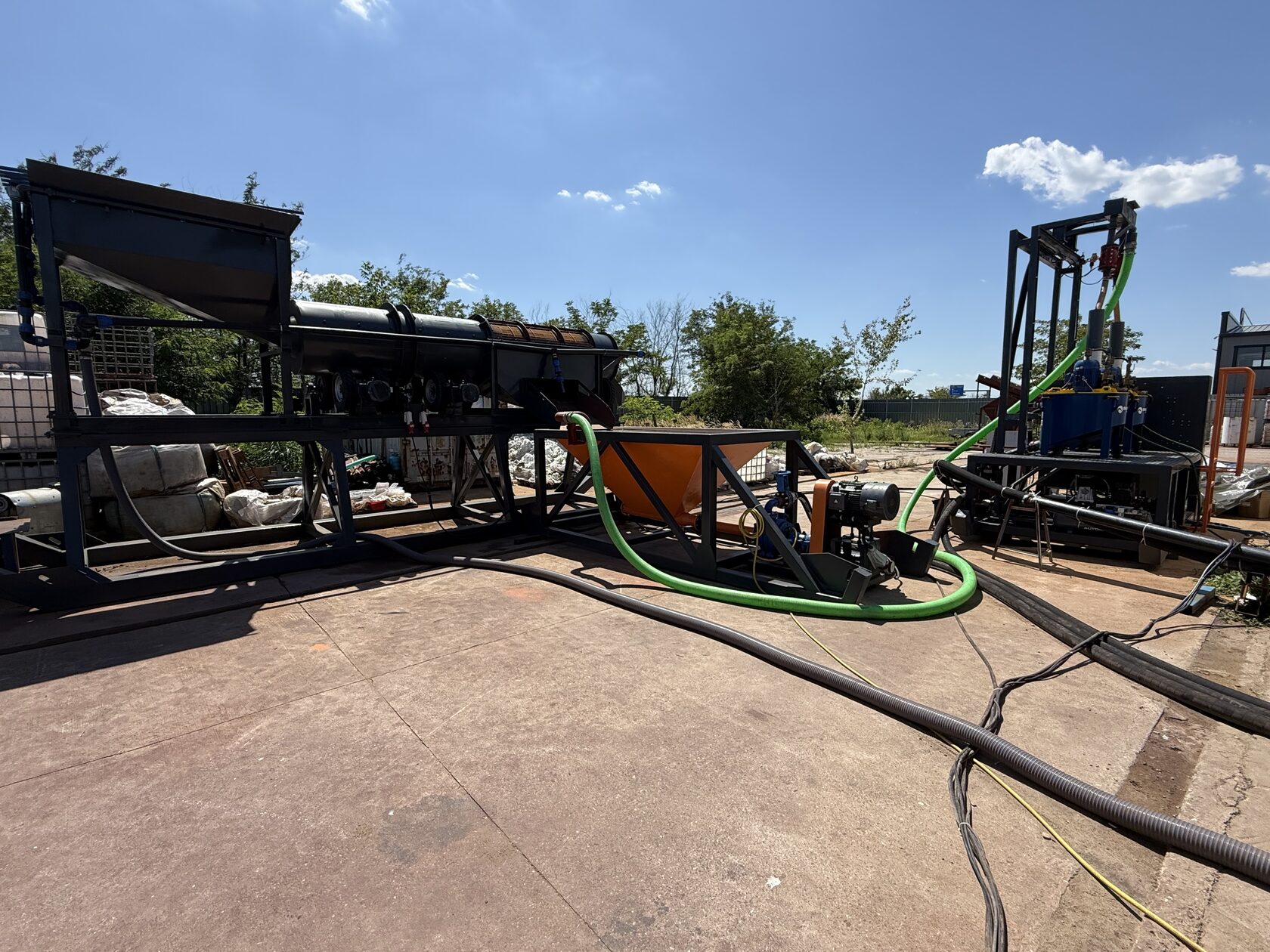
Scrubber–Trommel Module
Washing & disintegration
The first block in the process line. It receives the run-of-mine material through a feed hopper fitted with grizzly bars that reject oversize, and delivers it into a tyre-driven rotary scrubber. Inside the rotating drum with lifter bars the material is intensively washed and disintegrated — clay agglomerates are broken down and heavy mineral grains are liberated.
An integrated trommel is fitted at the drum discharge, with an installed aperture of 5 mm. The undersize (below 5 mm) flows by direct gravity discharge into the sump, where it is made into slurry and pumped to the vibrating screen. The oversize of 5–100 mm is discharged to waste; a deep-fill sluice can be installed on this outlet to catch coarse gold. The module is mounted on a dedicated transport frame.
| Parameter | Value |
|---|---|
| Feed hopper volume, m³ | 1.5 |
| Grizzly bar opening, mm | 150 |
| Scrubber drum, diameter × length, mm | Ø900 × 2500 |
| Trommel screen size, mm | 900 × 2500 |
| Drive type | Tyre drive (rubber tyres) |
| Motors, quantity and power | 2 × 7.5 kW |
| Integrated trommel aperture, mm | 5 (removable) |
| Throughput, t/h | up to 60 (solids) |
| Oversize product, mm | 5–100 (discharged to waste) |
| Deep-fill sluice on oversize | Optional — for coarse gold |
| Block dimensions (L×W×H), mm | 7200 × 2000 × 4050 |
| — trommel height, mm | 2450 |
| — frame height, mm | 1600 |
| Block weight | ≈ 10 t |
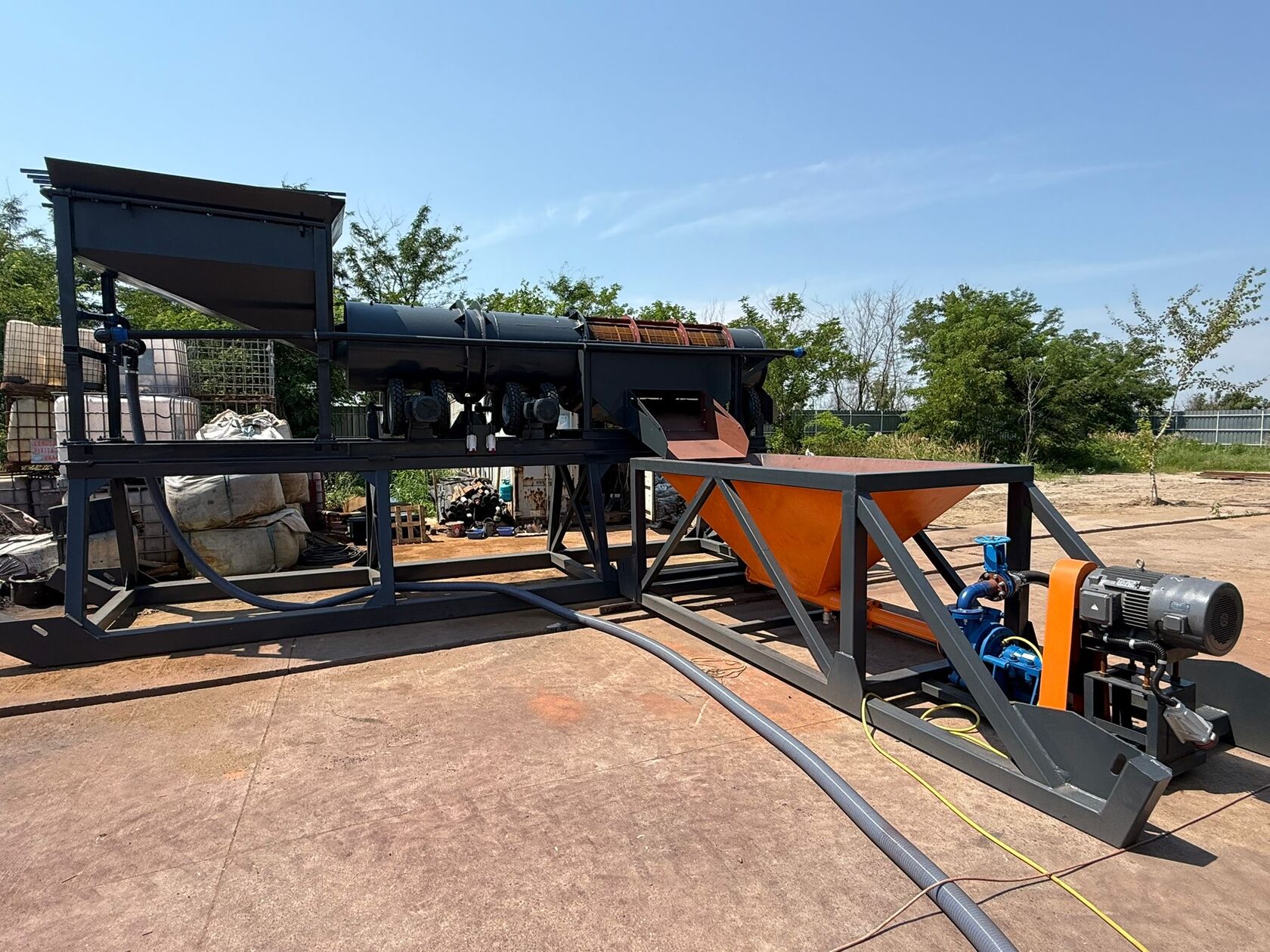
Photo 1 — Scrubber with trommel, assembled
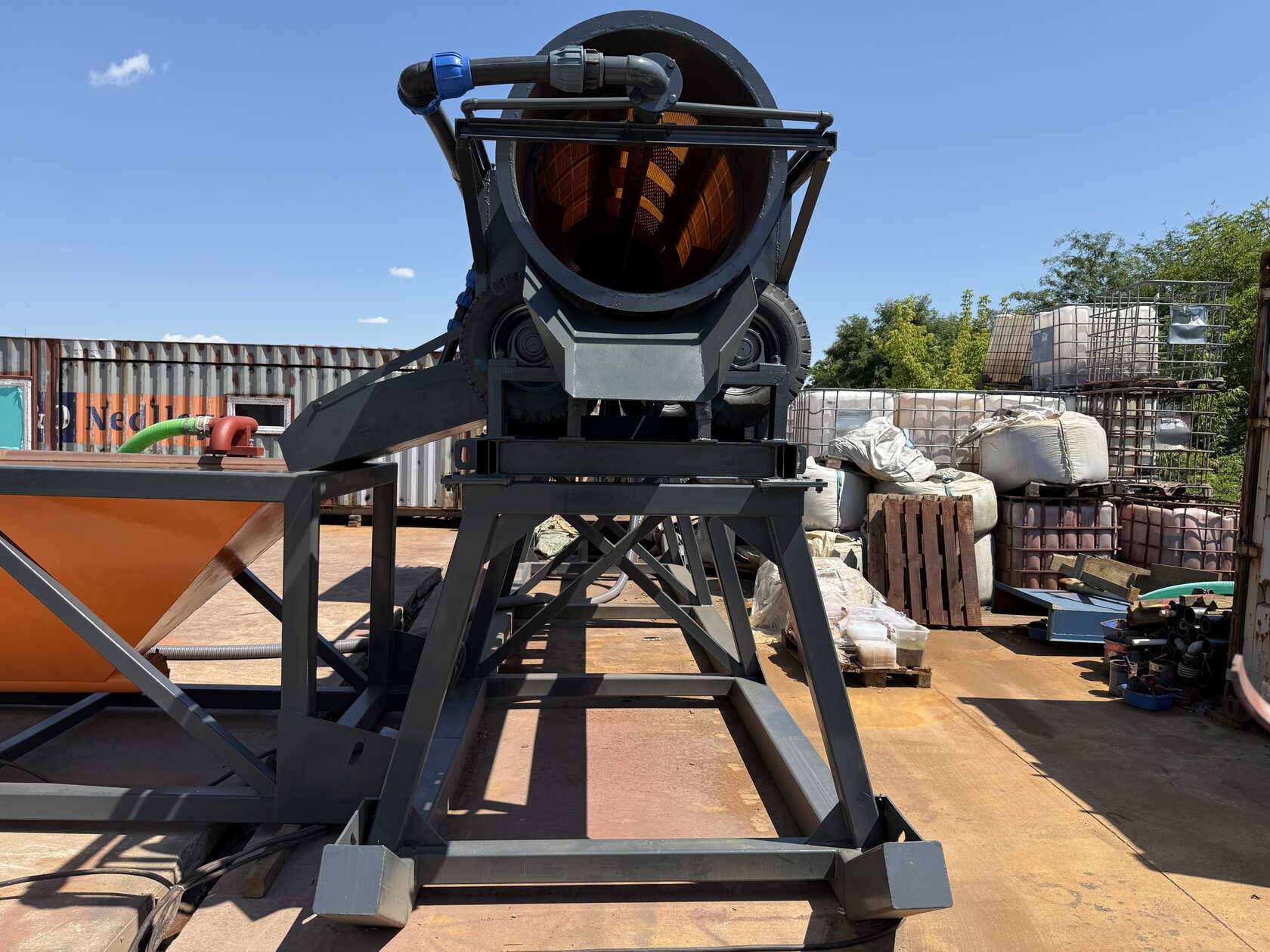
Photo 2 — Scrubber–trommel
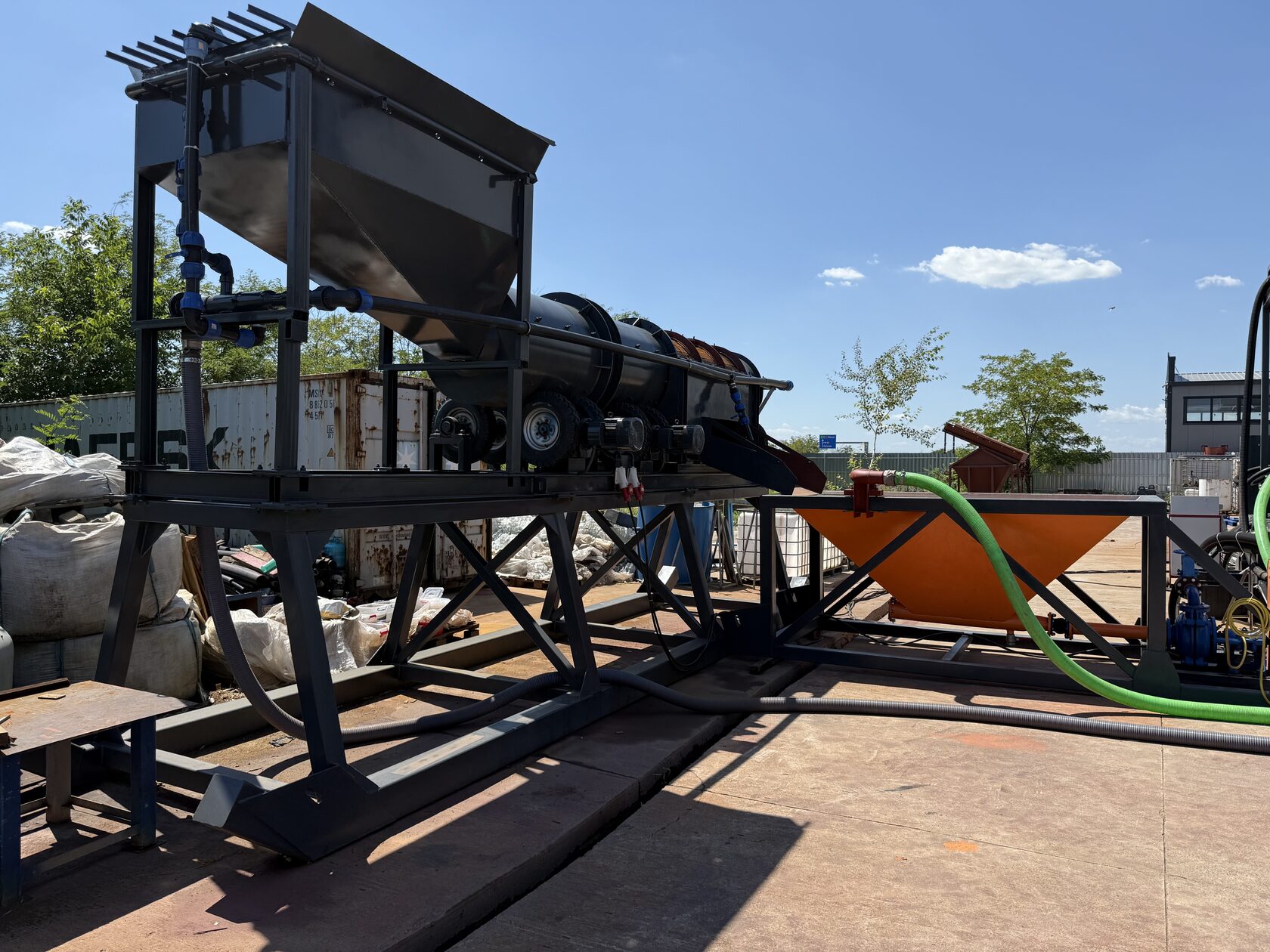
Photo 3 — Scrubber–trommel with feed hopper
Photo 4 — General view: scrubber–trommel, sump module and concentrator block in a single processing line
Vibrating Screen Module
Screening & slurry preparation
A self-contained classification block with its own slurry preparation. Slurry from the scrubber sump is fed onto a vibrating screen with an installed aperture of 2 mm. The undersize (below 2 mm) enters the built-in sump, where it is mixed with water to the required slurry density; slurry pumps installed in the same block deliver the prepared slurry directly to the concentrator block.
The oversize of 2–5 mm passes through a vibrating sluice adjustable for inclination (height/angle) as well as vibration frequency and amplitude. The module carries a water distribution manifold with control valves and pressure gauges. Screening, slurry preparation and slurry delivery are therefore performed within one module.
| Parameter | Value |
|---|---|
| Deck size (L×W), mm | 3000 × 1200 |
| Screen aperture, mm | 2 (removable) |
| Screen material | Polyurethane |
| Throughput, t/h | 30 (solids) |
| Vibromotors, quantity and power | 2 × 1.5 kW (exciting force 25 kN each) |
| Vibrating sluice on oversize 2–5 mm | Adjustable inclination, vibration frequency and amplitude |
| Feed hopper / distributor, m³ | ≈ 1.5 |
| Built-in sump volume, m³ | ≈ 1.9 |
| Slurry pump | 18.5 kW |
| Slurry delivery | To the concentrator block via flexible reinforced hoses |
| Water distribution manifold, m³/h | 100 Common manifold — total water volume for the whole plant, all blocks |
| Block dimensions (L×W×H), mm | 5400 × 1600 × 2500 (transport) / 4000 (operating height) |
| Block weight | ≈ 5 t |
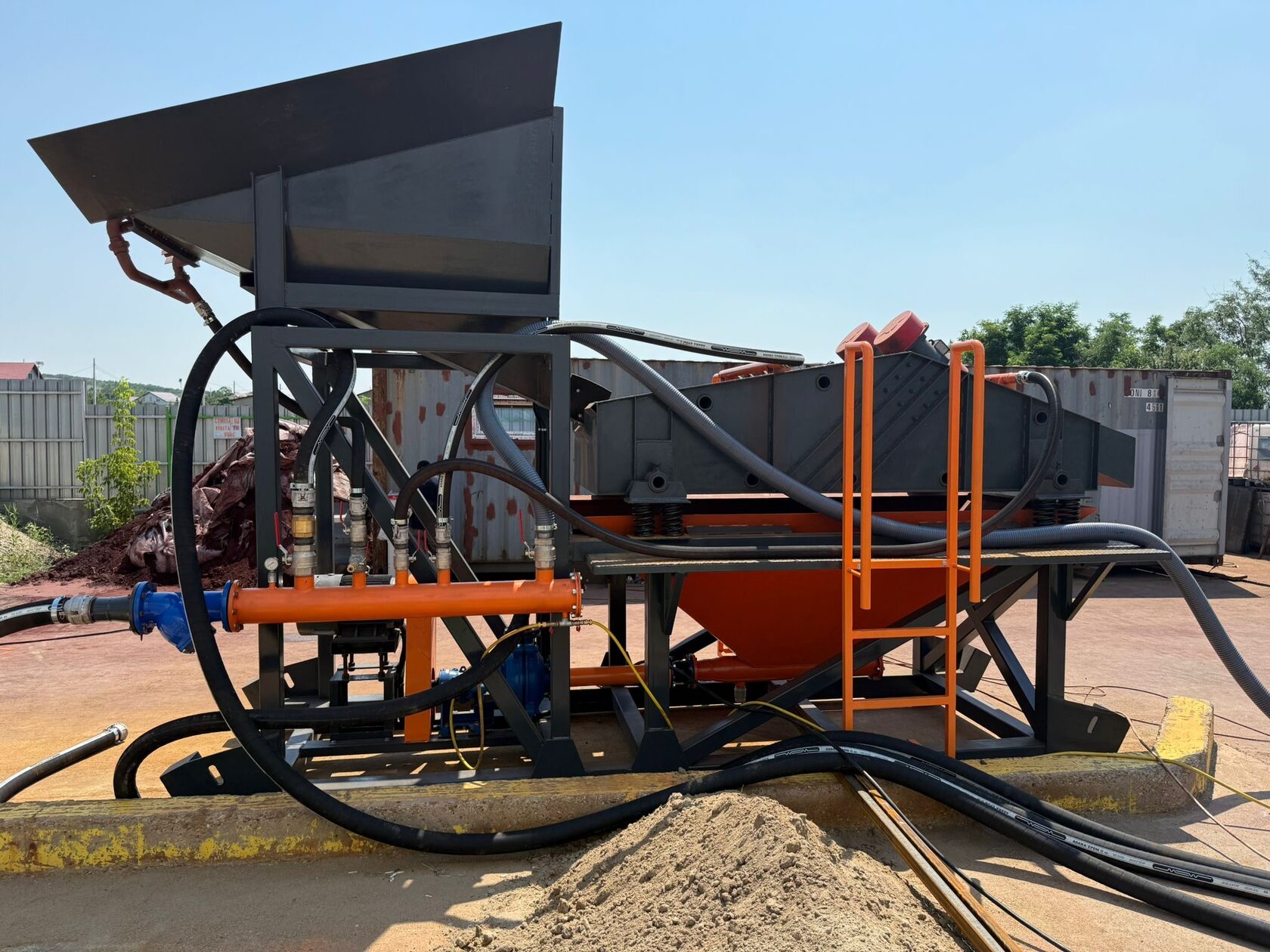
Photo 5 — Vibrating screen module, water manifold with valves and pressure gauges
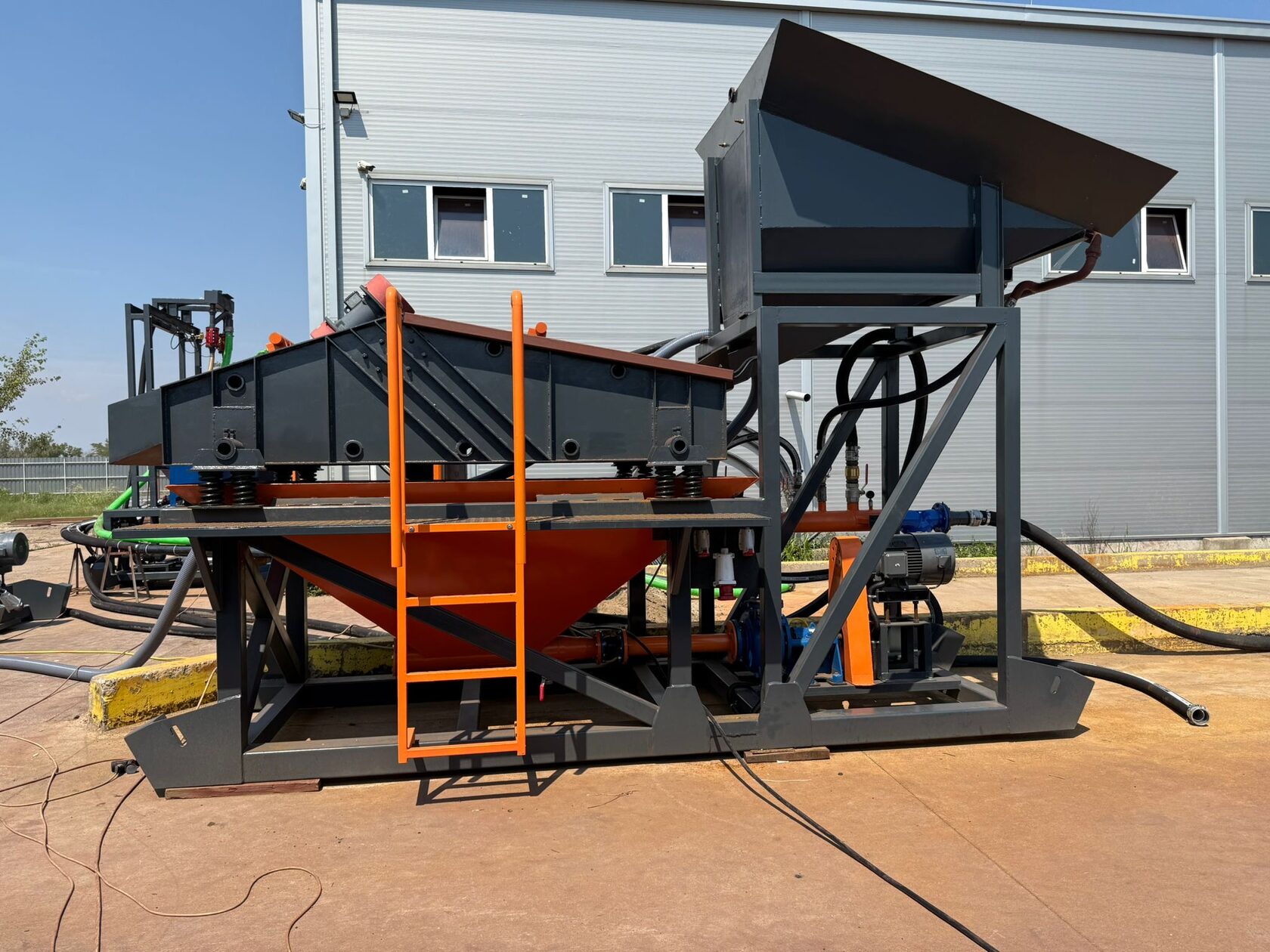
Photo 6 — Vibrating screen module
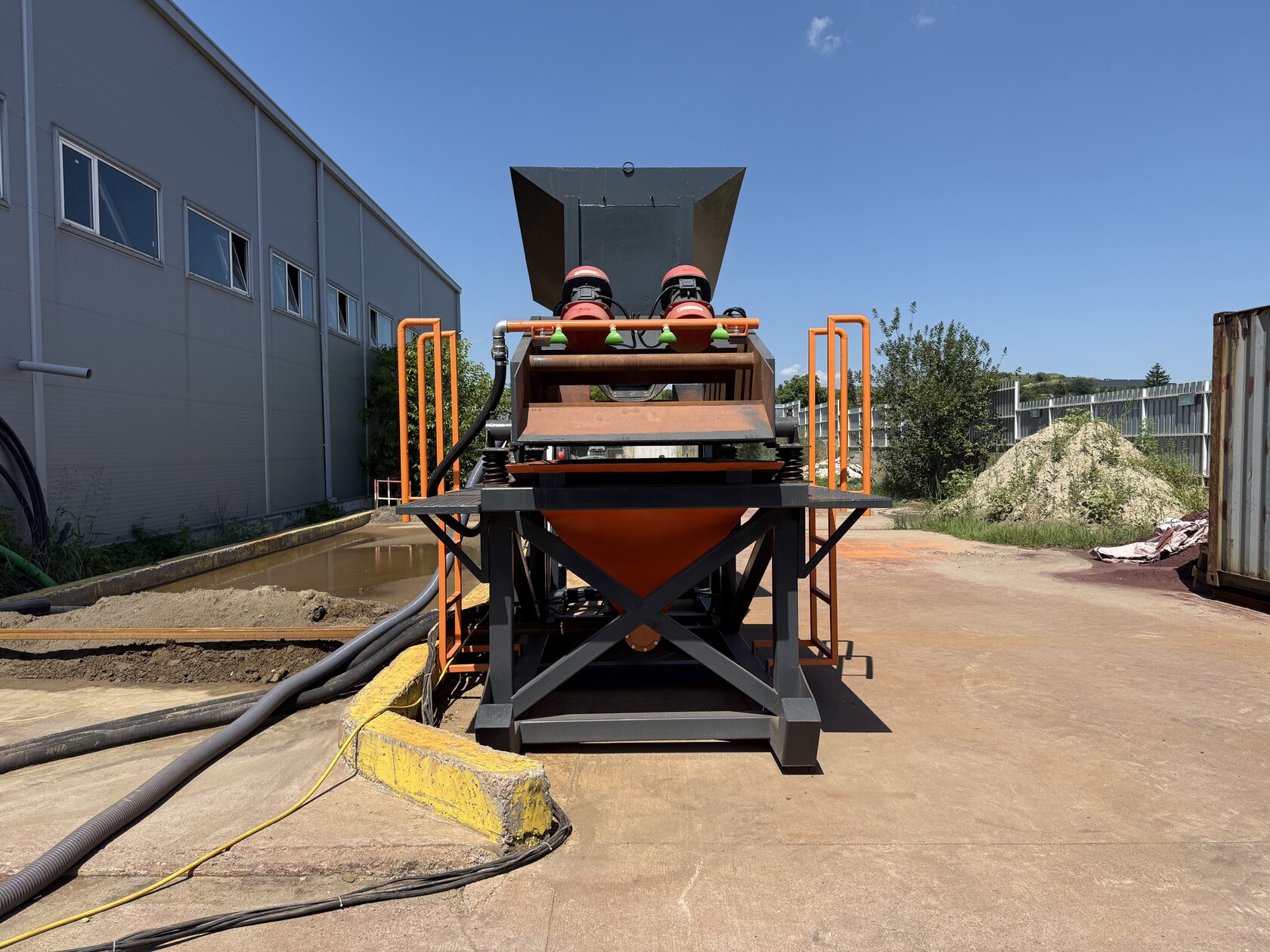
Photo 7 — Vibrating screen module
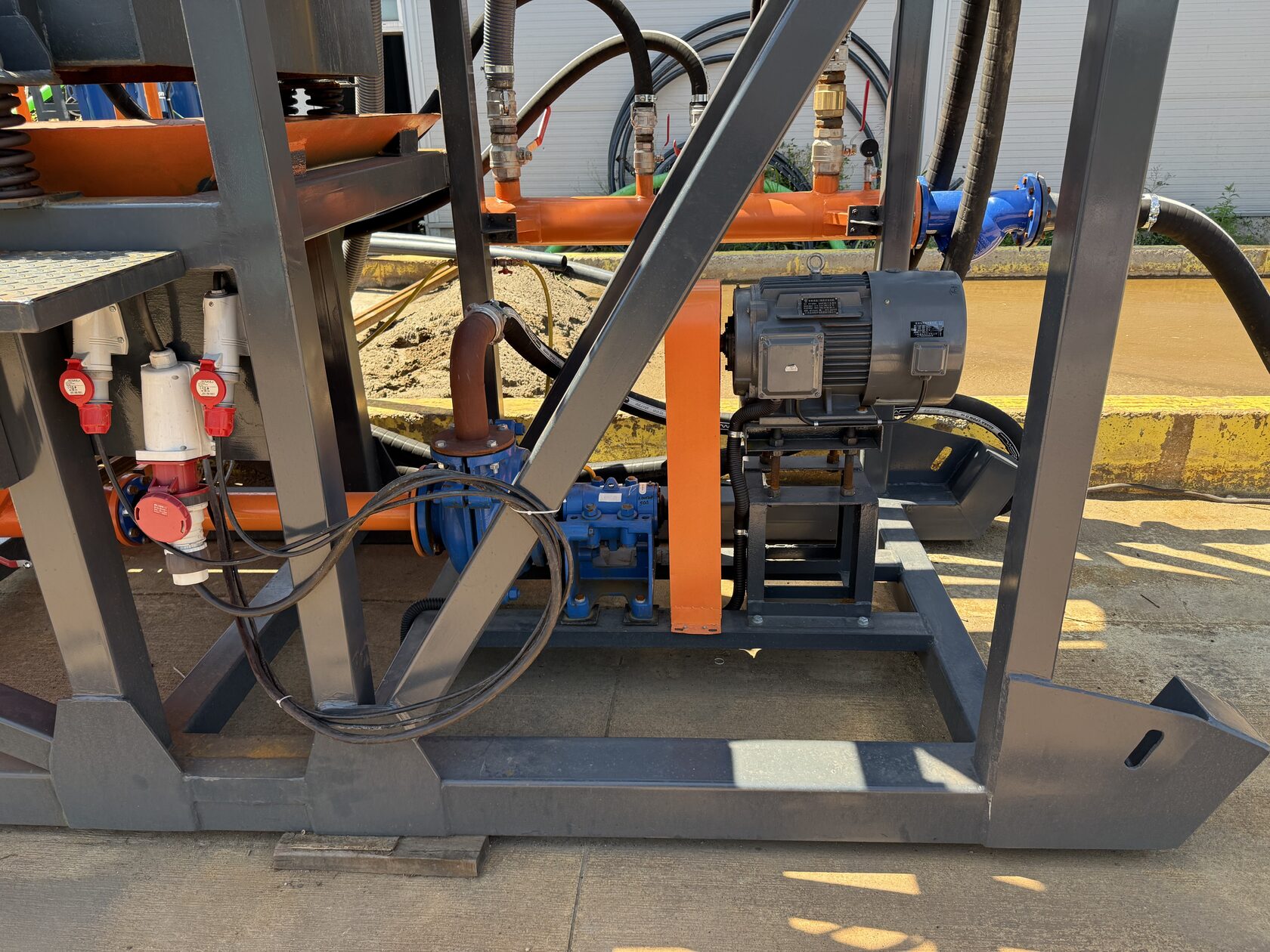
Photo 8 — Vibrating screen module
Sump Module
Slurry preparation & pumping
A separate, self-contained module in which the slurry is formed: a conical receiving sump takes the trommel undersize (below 5 mm), mixes it with water to the required density, and a centrifugal slurry pump delivers the prepared slurry to the next block through flexible reinforced hoses — in the current layout, to the vibrating screen. The pump wet end is manufactured from wear-resistant materials.
A particular feature of this module: it is used together with the scrubber–trommel block (receiving the trommel discharge and preparing slurry from it) and can additionally be used as an independent element in various process flowsheets wherever a standalone slurry preparation and pumping unit is required. Unlike the vibrating screen block, where the sump and pumps are built in, this module is supplied separately.
| Parameter | Value |
|---|---|
| Sump volume, m³ | 1.9 |
| Primary connection point | Scrubber–trommel discharge |
| Application | With the scrubber; or as an independent slurry preparation unit in various flowsheets |
| Pump model | 4/3 AH |
| — motor power, kW | 18.5 |
| — wet end lining | High-chrome iron |
| Block dimensions (L×W×H), mm | 5330 × 1710 × 1520 |
| Block weight | ≈ 1 t |
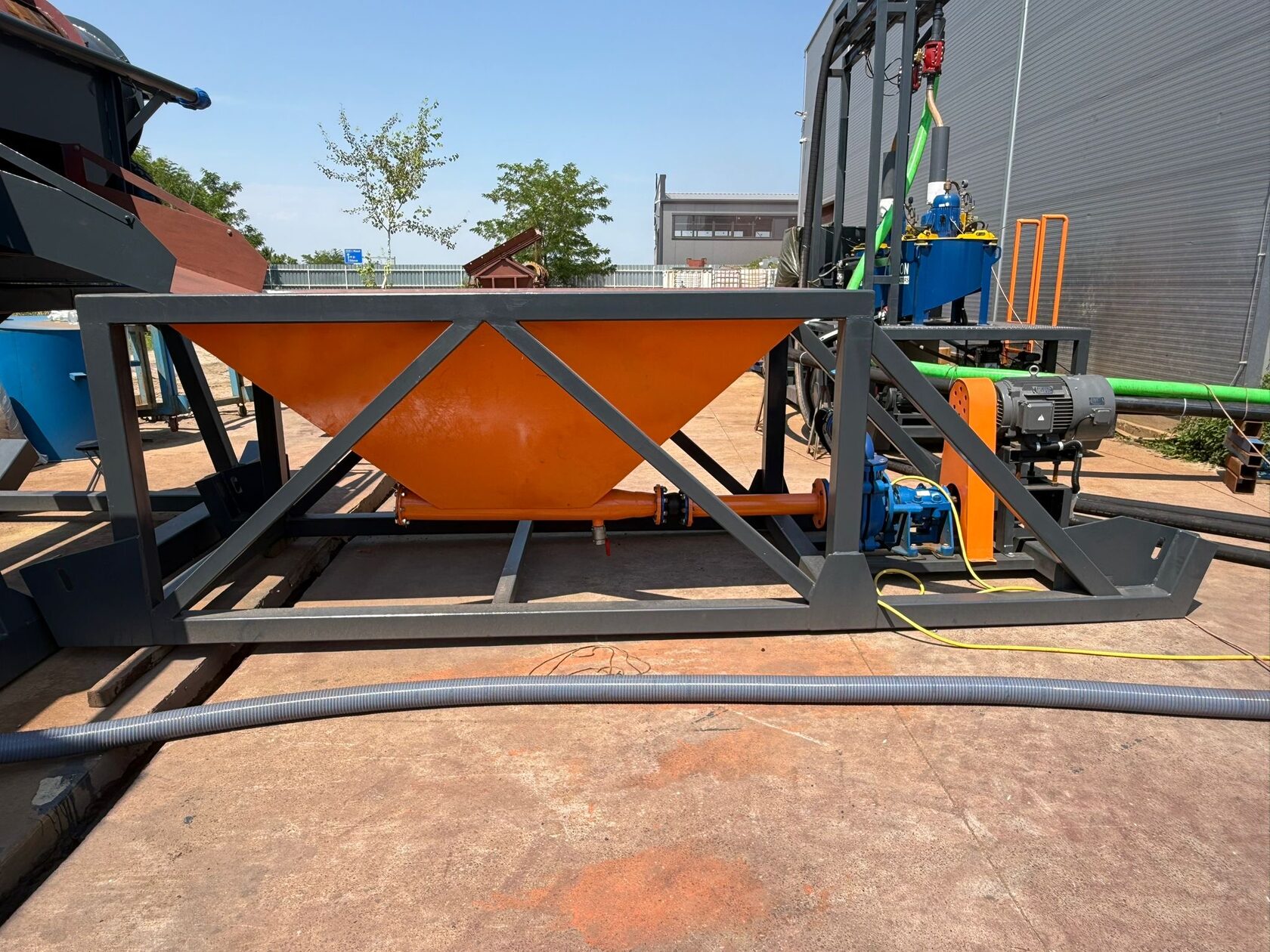
Photo 9 — Sump with pump, side view
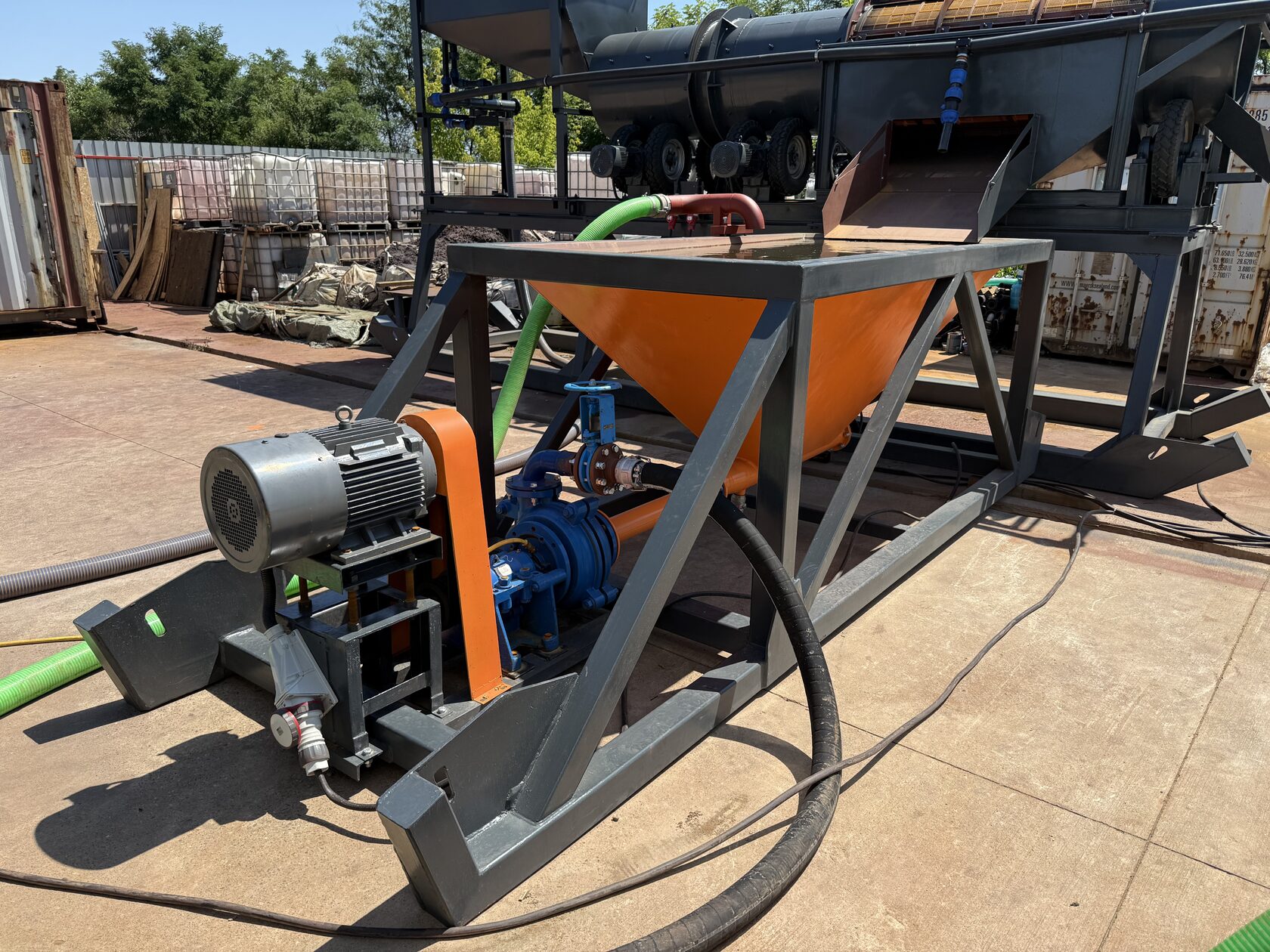
Photo 10 — Sump module
Falcon SB400 Concentrator Module
Concentration · conditioning · pneumatics · automation
The core of the plant and its most densely equipped block. This is not simply two concentrators, but a complete concentration module on a common frame with a service platform and guard rails, comprising several subsystems:
- Two Falcon SB400 (Sepro) centrifugal concentrators — the gravity concentration itself, recovering free gold and other heavy minerals.
- Feed conditioning and distribution unit: a tank with a mechanical agitator providing uniform feed and stable slurry density to both machines.
- Pneumatic system with an Atlas Copco air compressor: supplies compressed air to the pneumatic actuator of the pinch valve on the concentrate discharge — during the rinse cycle the valve is opened under Auto-Pac control (bowl fluidisation itself is performed with water, not air).
- Control automation: variable frequency drives (VFD) / Auto-Pac system setting acceleration, centrifugal field and periodic automatic concentrate rinse.
- Flexible hose and manifold connections distributing slurry and fluidisation water, plus a service platform with stairs and guard rails.
At maximum operating settings (rotor speed and G-force, fluidisation water pressure) the Falcon SB400 concentrators — and the plant as a whole — recover gold particles down to 30 microns.
Two machines are installed in the block, connected in parallel and operating simultaneously, so the production figures of the block are the sum of both units. The table below gives values per single unit and for the block of two.
| Parameter | 1 unit | 2 units (parallel, simultaneous) |
|---|---|---|
| Type / model | Falcon SB400, Semi-Batch, Auto-Pac | Same, 2 pcs |
| Throughput by solids, t/h | 1–15 | 2–30 |
| Slurry flow, m³/h (max.) | 30 | 60 |
| Slurry density, % solids (max.) | 65 | 65 |
| Feed size, mm (recommended / absolute) | 2.0 / 2.5 | 2.0 / 2.5 |
| Recoverable gold size at max. settings, microns | from 30 | from 30 |
| Concentration area, m² | 0.21 | 0.42 (total) |
| G-force range | 50–200 G | 50–200 G |
| Max. rotor speed, rpm | 900 | 900 |
| Fluidisation (clean) water, m³/h | 3–5 | 6–10 |
| Fluidisation water pressure, bar | 2–3 | 2–3 |
| Concentrate removal | Automatic rinse | Same |
| Drive | VFD, Auto-Pac, dynamic braking | Same, 2 pcs |
| Motor power, kW / hp | 3.7 / 5 | 7.4 / 10 (total) |
| Voltage / frequency, V / Hz | 380–460 / 50–60 | 380–460 / 50–60 |
| Weight, kg | 485 | 970 (total) |
| Machine dimensions, m (W×L×H) | 1.02 × 1.00 × 1.43 | Two machines on a common frame |
| Assembled block dimensions (L×W×H), mm | — | 4800 × 2000 × 4310 (operating) / 2300 (transport height) |
| Assembled block weight | — | ≈ 3.5 t |
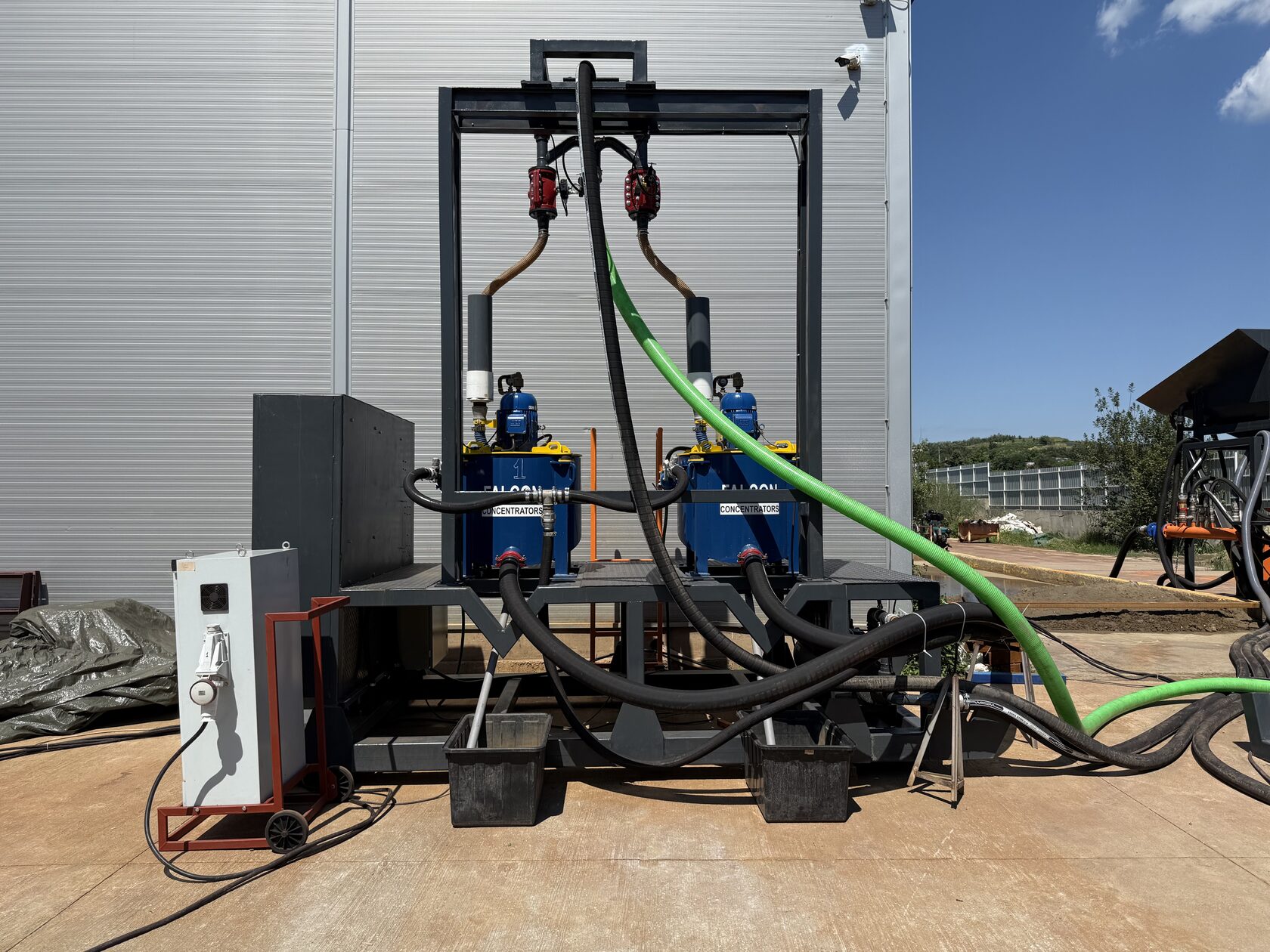
Photo 11 — Falcon SB400 concentrator module, assembled
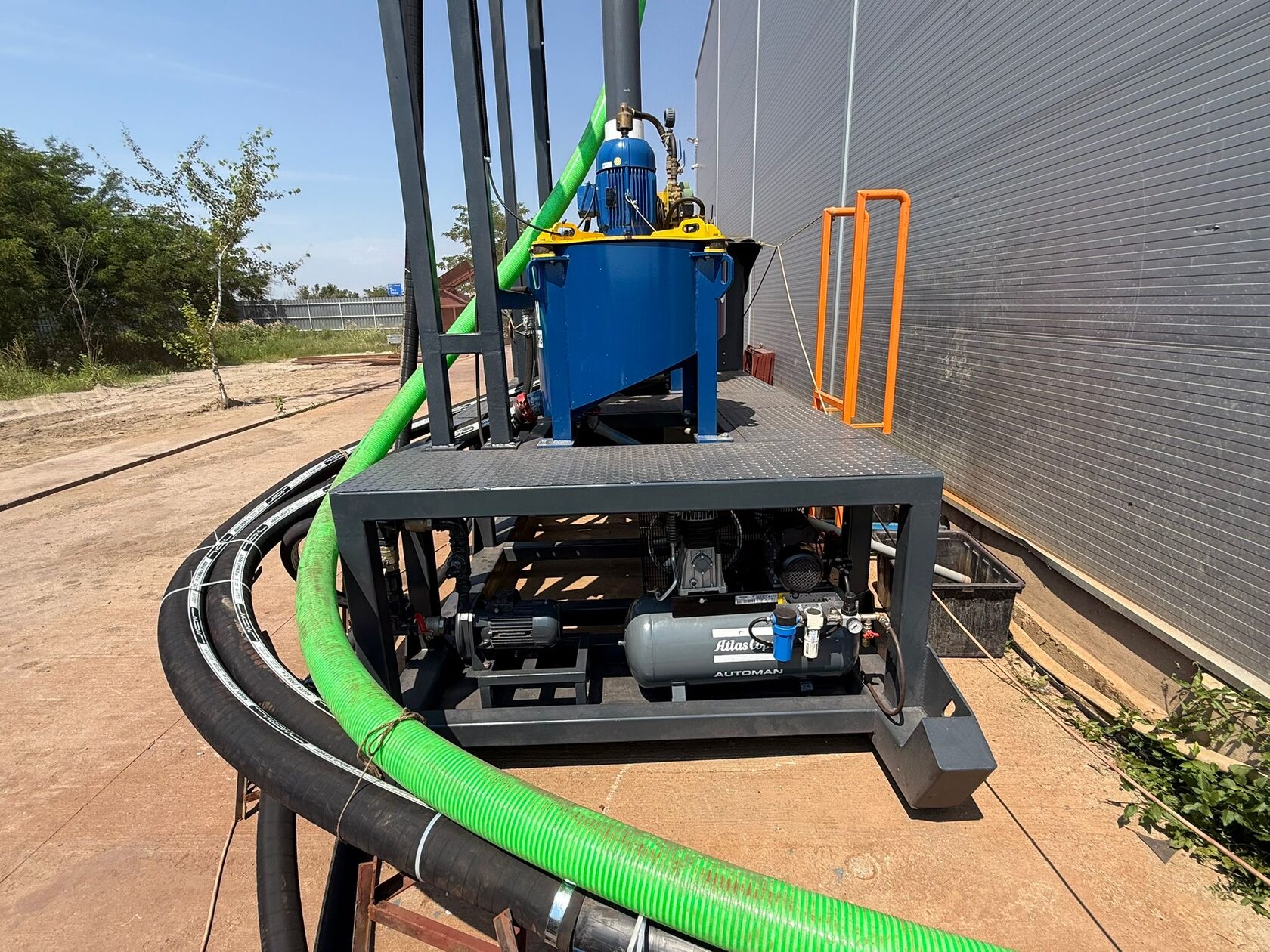
Photo 12 — Conditioning tank and Atlas Copco compressor (close-up)
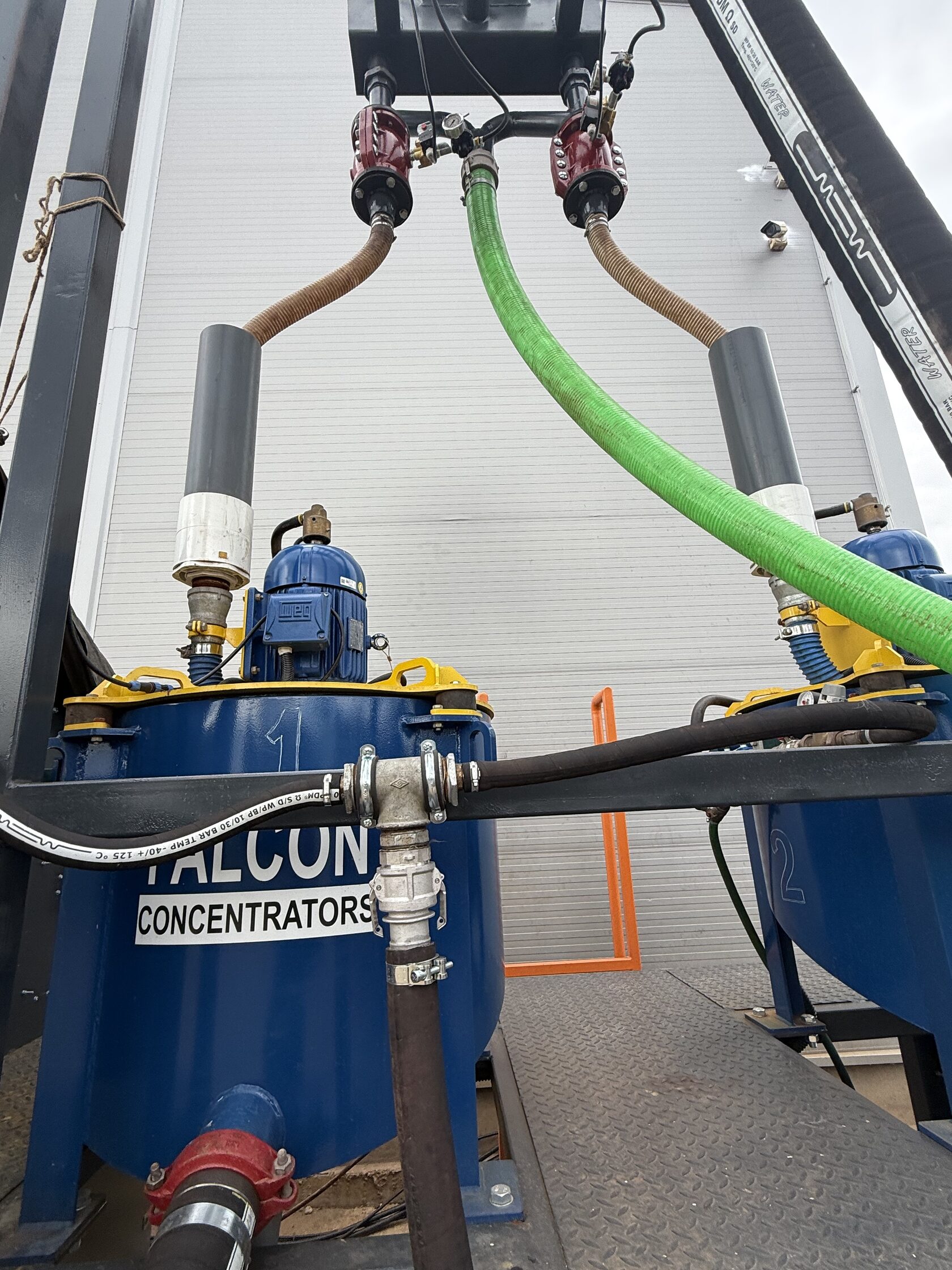
Photo 13 — Concentrator module (close-up)
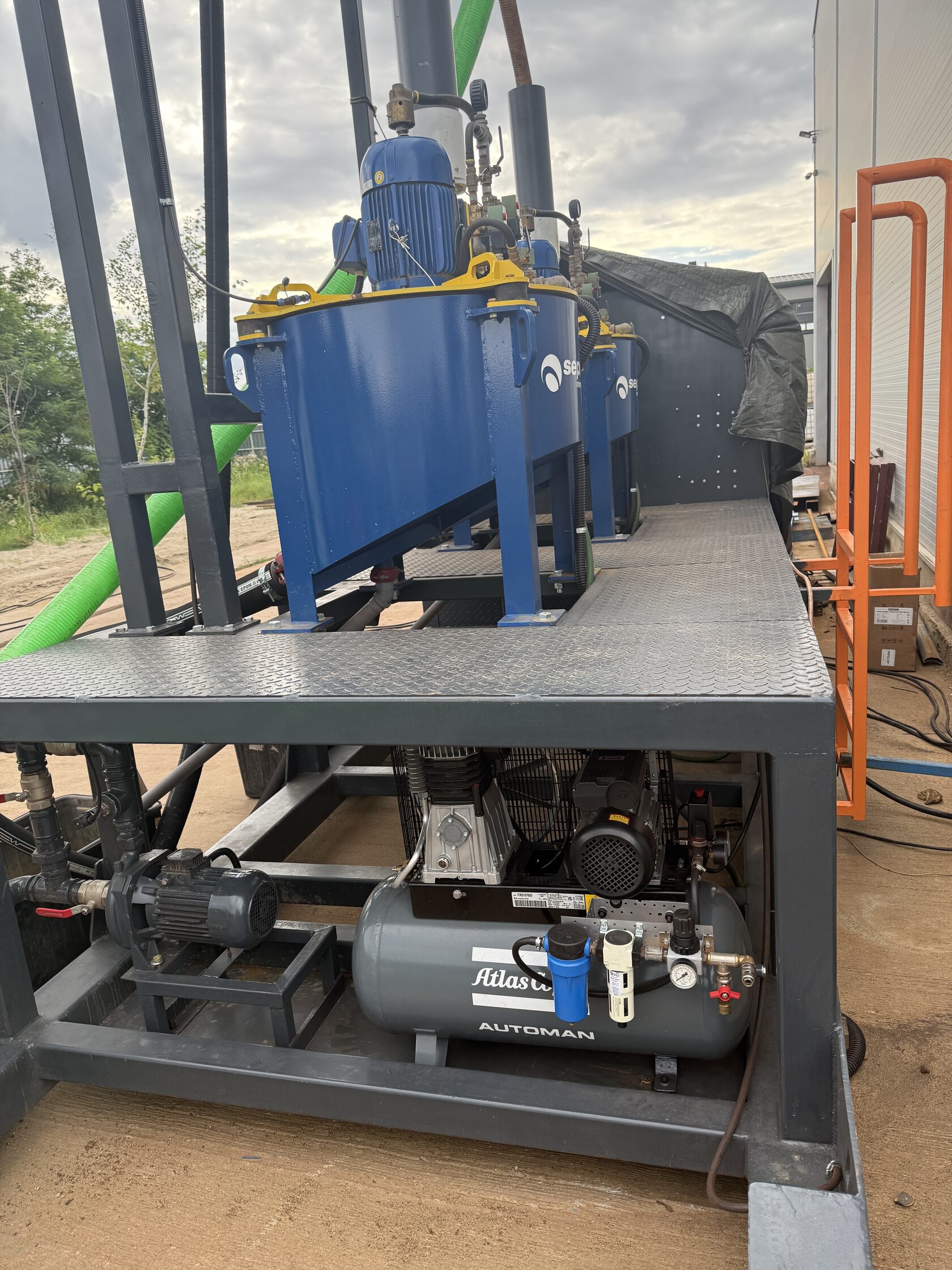
Photo 14 — Concentrator module (close-up)
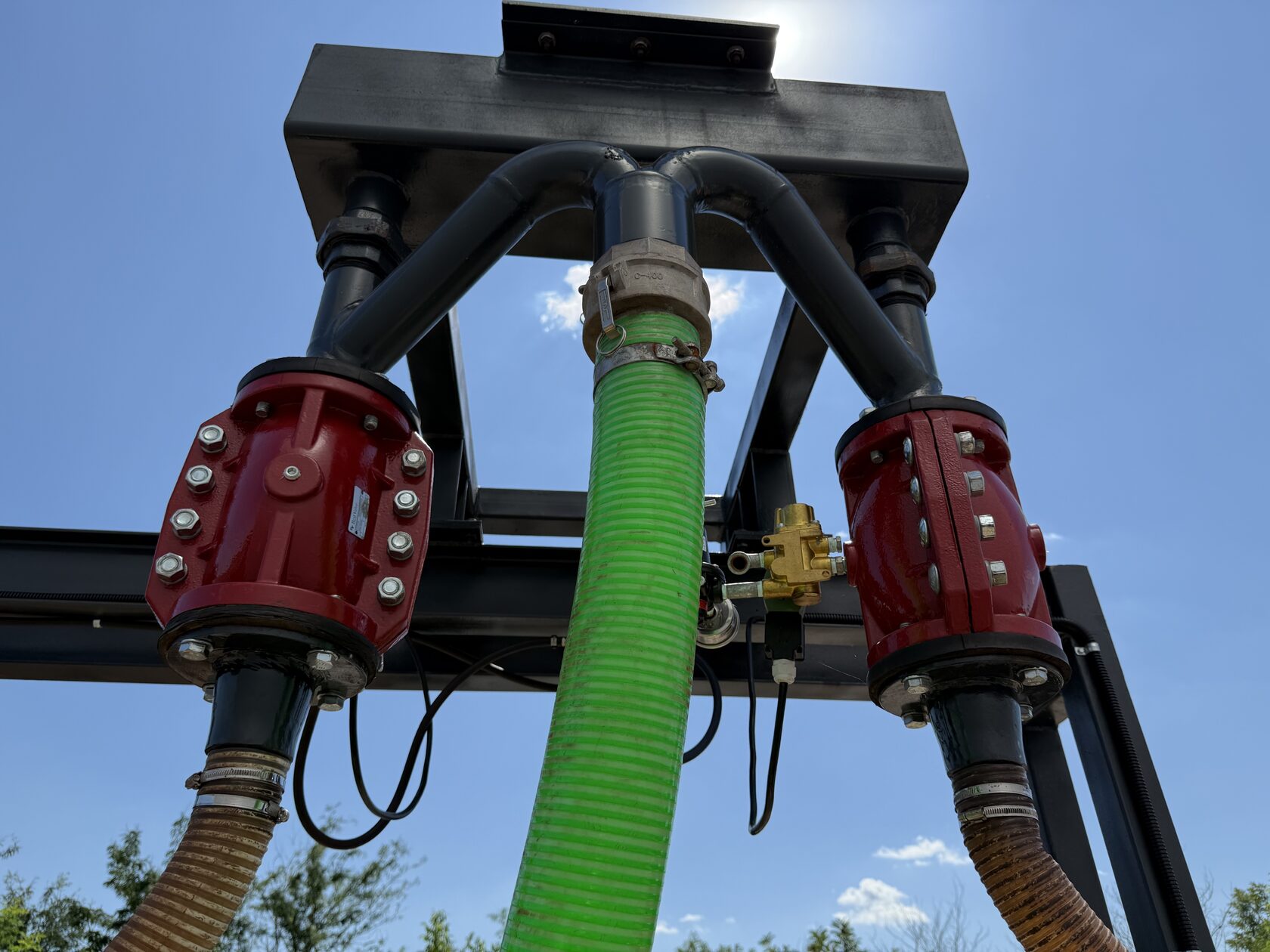
Photo 15 — Concentrator module
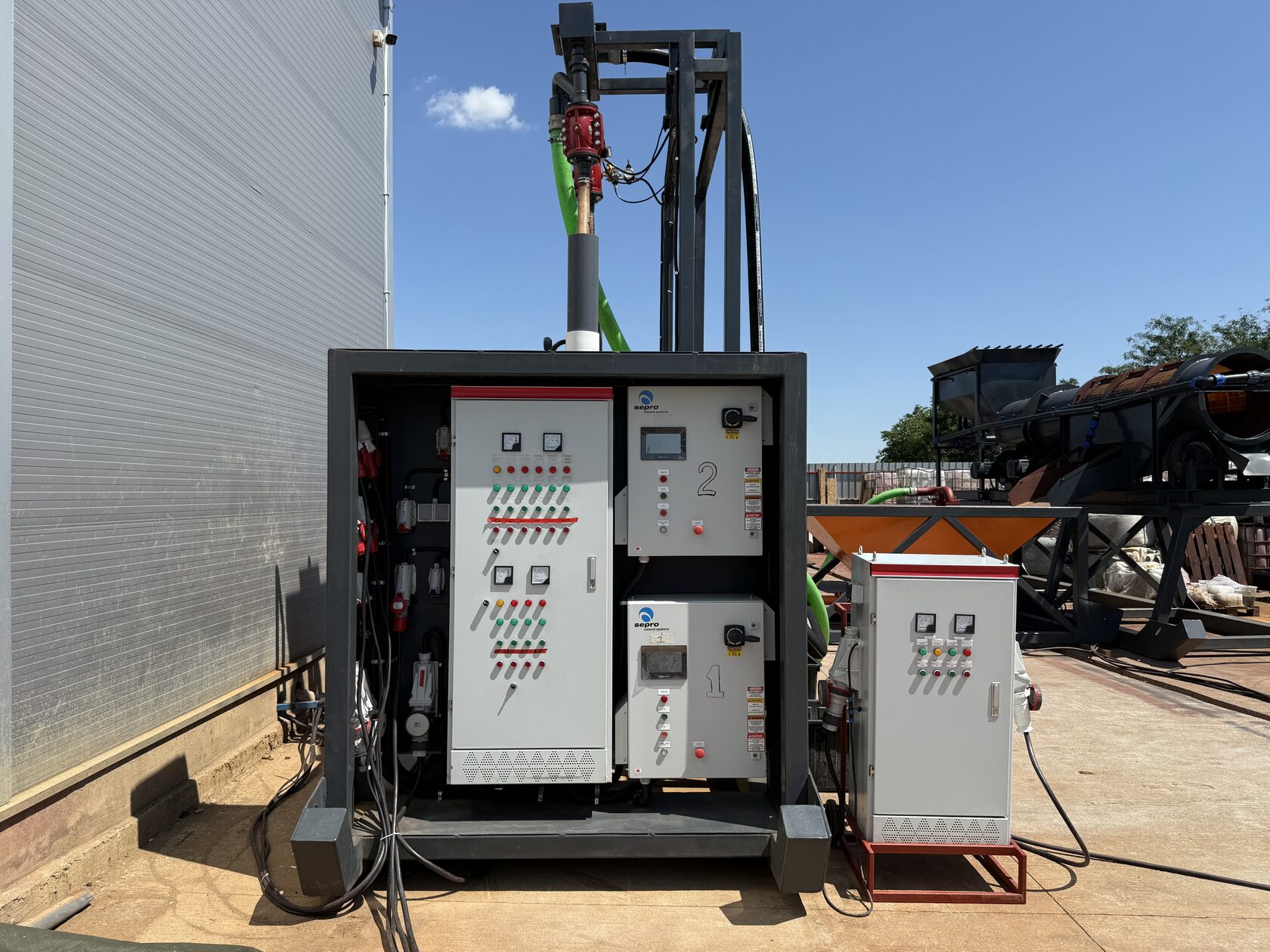
Photo 16 — Concentrator module
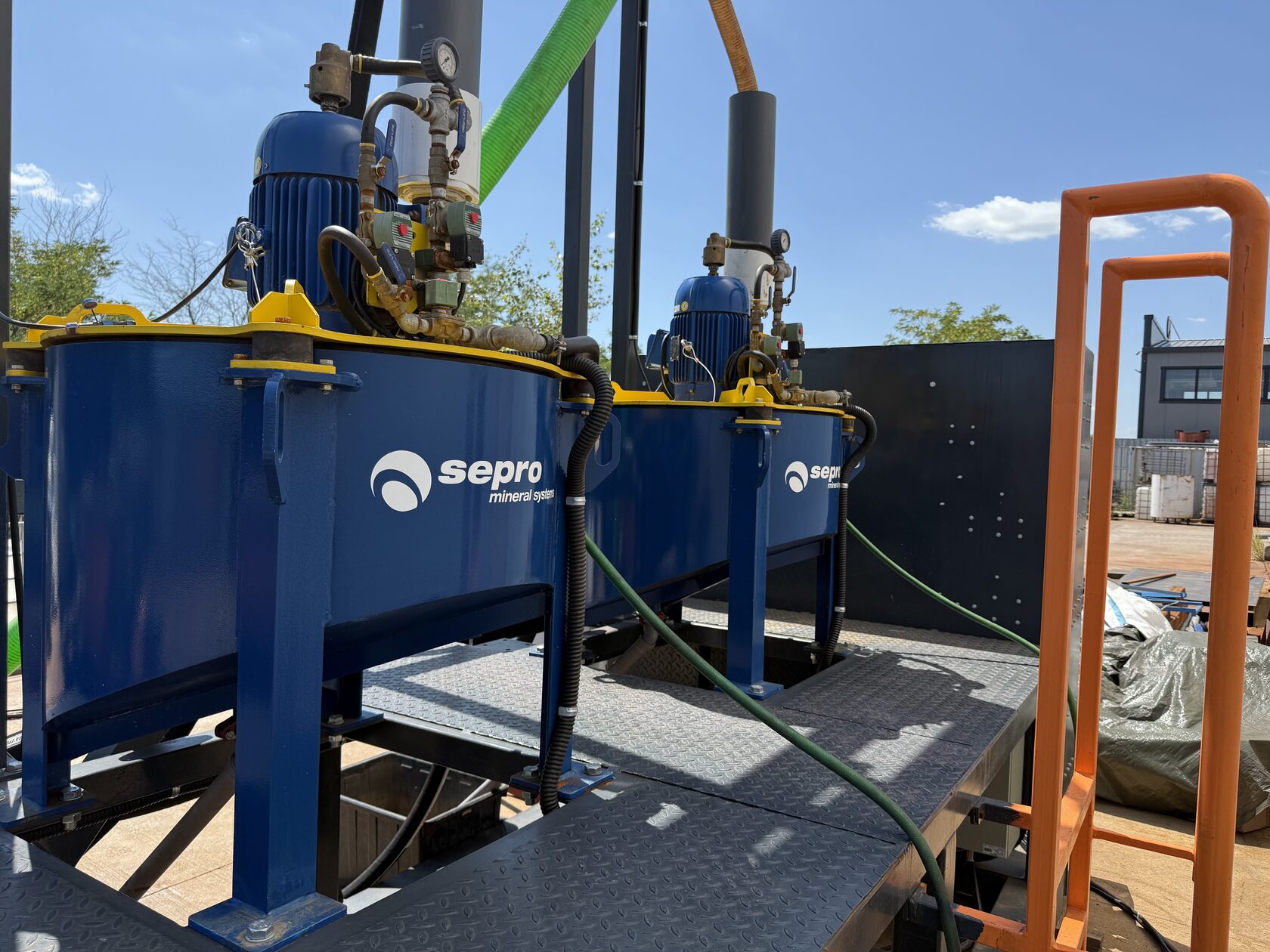
Photo 17 — Concentrator module
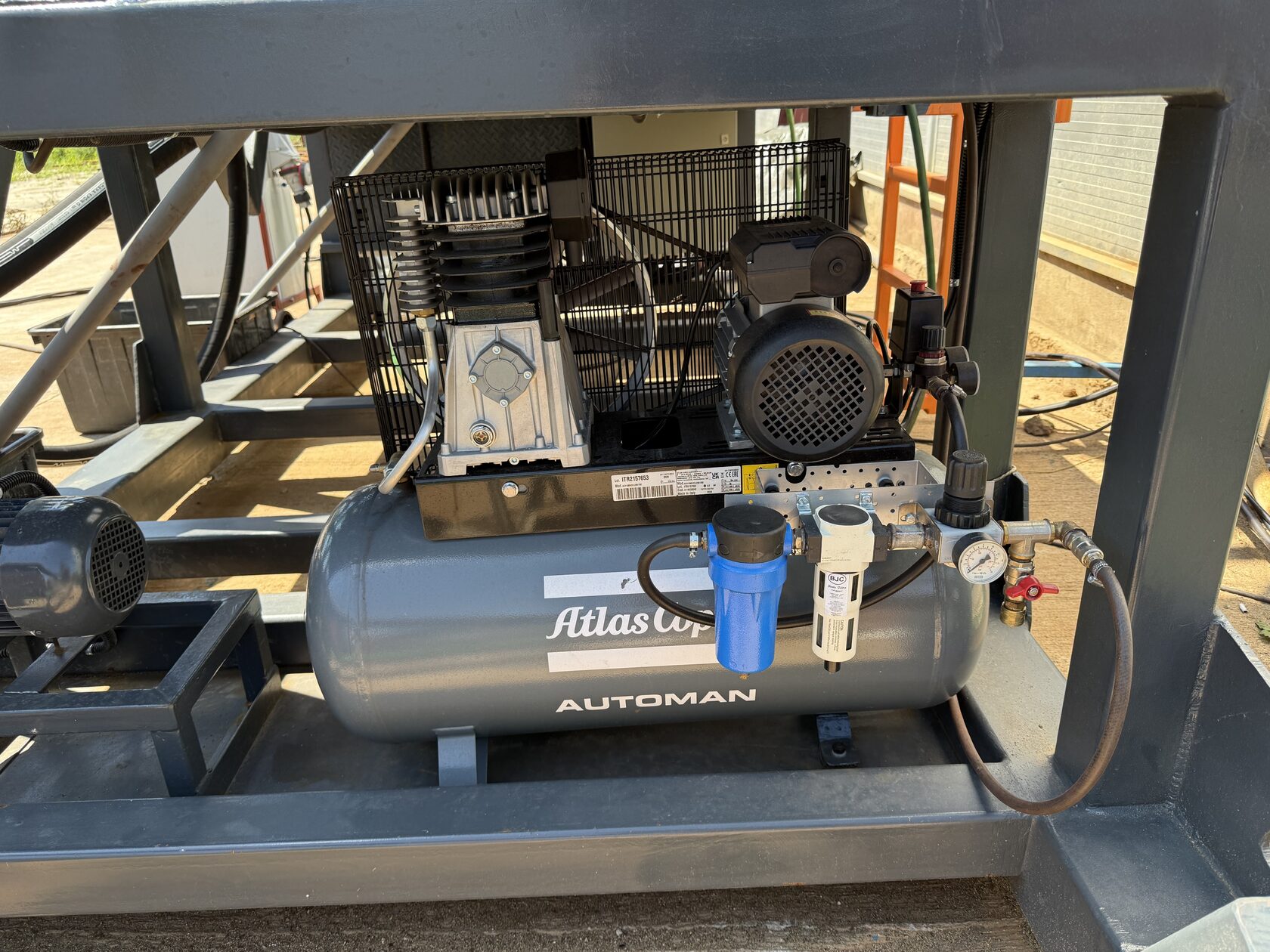
Photo 18 — Concentrator module
Pump Module
Water supply
A separate block supplying water to all modules of the plant — scrubber and screen spray water, slurry preparation in the sumps, and concentrator fluidisation. The pump set is mounted on a common frame; the pump is centrifugal with a belt drive. It can be driven either by an electric motor or by a diesel engine, which secures water supply with or without a mains connection. The discharge line is fitted with shut-off valves and a pressure gauge.
A separate filter and hydrocyclone unit is connected to the pump set, allowing the water fed to concentrator fluidisation to be cleaned separately to the required level of purity.
| Parameter | Value |
|---|---|
| Pump | Centrifugal |
| Drive | Electric motor and/or diesel engine (belt transmission) |
| Capacity, m³/h | 100 |
| Electric motor power, kW | 22 |
| Function | Water supply to all blocks (spray water, slurry preparation, fluidisation) |
| Discharge line | Shut-off valves, pressure gauge |
| Fluidisation water treatment | Separate filter and hydrocyclone unit |
| Block dimensions (L×W×H), mm | 1260 × 1200 × 1350 |
| Block weight, kg | 400 |
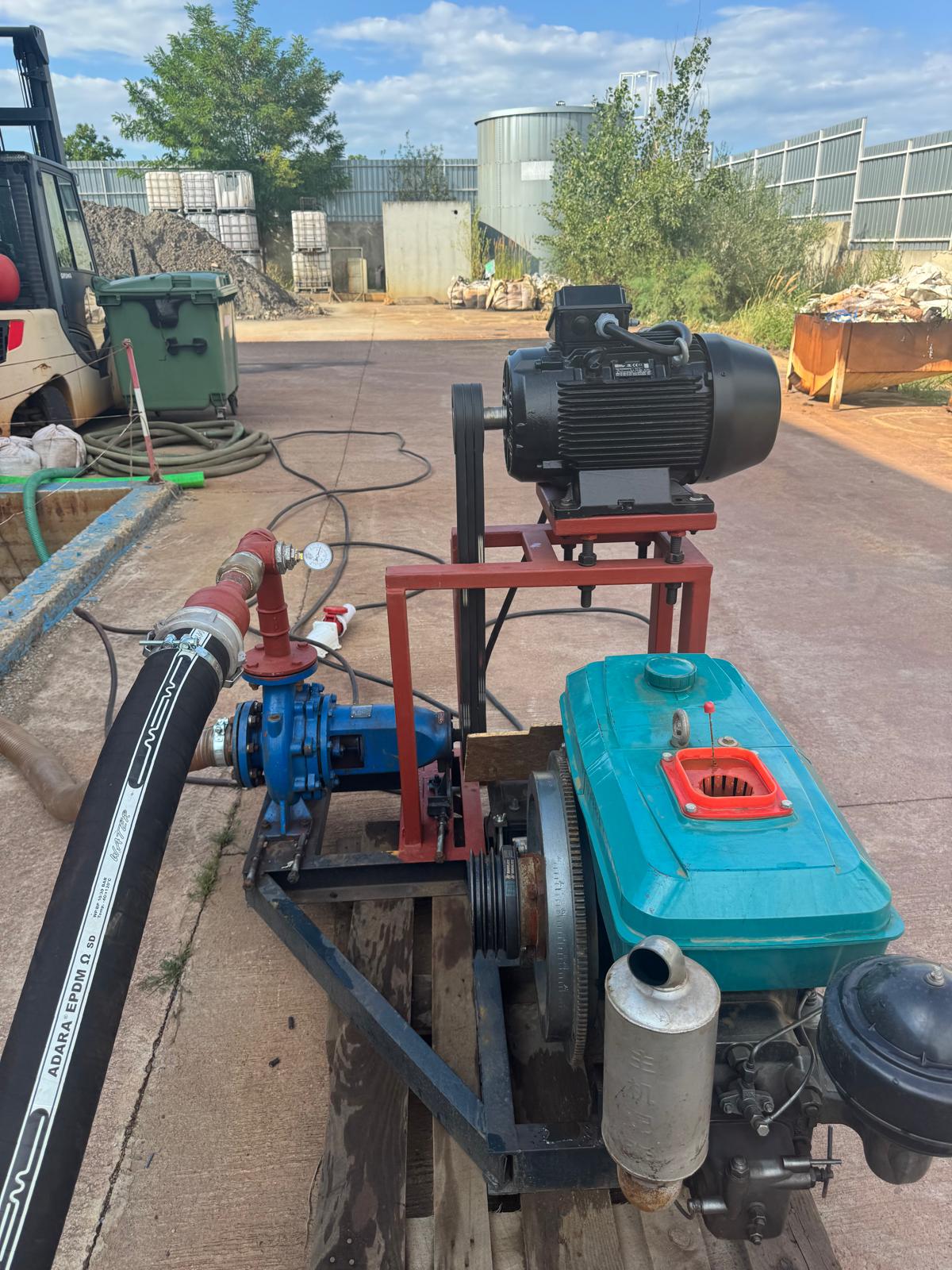
Photo 19 — Water supply pump set: centrifugal pump driven by an electric motor and a diesel engine
Gold Room Module
Concentrate upgrading
The final block of the process line — a modular room for concentrate upgrading. In its compact (folded) state the room has the transport dimensions of a 40-foot container; once positioned on site, the side walls extend on dedicated built-in slides, increasing the total floor area by 70%.
The room equipment includes: shaking tables, a magnetic separator, a concentrate receiving hopper, a slurry preparation unit feeding the tables, specialised pumps, piping and other equipment. A separate area is also provided for weighing and storing the finished product after upgrading.
Section 5
Power Module — Diesel Generator
The generator set supplied with the plant covers the full installed load and allows the FV3000 to operate entirely off-grid.
| Parameter | Value |
|---|---|
| Model | BFK-150KW |
| Manufacturer | Yangzhou Diesel Generator Equipment Co., Ltd. (China) |
| Year of manufacture | June 2024 |
| Standard | GB/T15548-2008 |
| Rated power | 150 kW (≈188 kVA at cos φ 0.8) |
| Standby power | 160–180 kW |
| Voltage / frequency | 400 V (3-phase) / 50 Hz |
| Rated current | ~270 A |
| Power factor (cos φ) | 0.8 |
| Connection | Three-phase, 4-wire |
| Engine | Cummins 6CTA-LQ-S002 (Cummins Power Technology) |
| — type | Diesel, 4-stroke |
| — speed | 1500 rpm |
| — cooling | Water |
| — starting | 24 V electric starter |
| Alternator | Brushless, copper winding, AVR |
| — insulation class | H |
| Protection | Overload and short-circuit |
| Execution | Open type (no canopy) |
| Dimensions (L×W×H), mm | ≈ 2400 × 800 × 1350 |
| Weight, kg | 1350 |
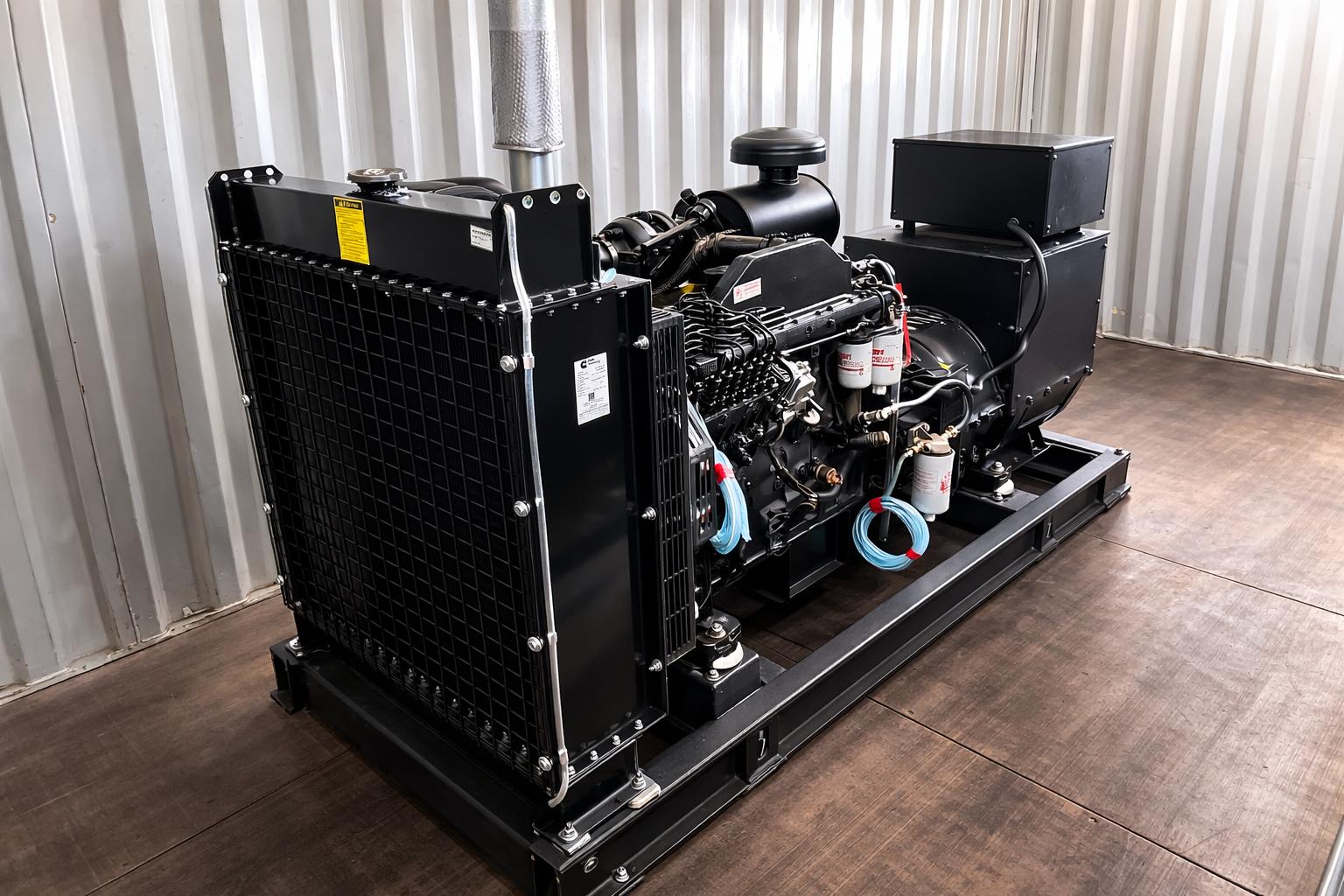
Photo 20 — Diesel generator BFK-150KW (Cummins engine), open execution
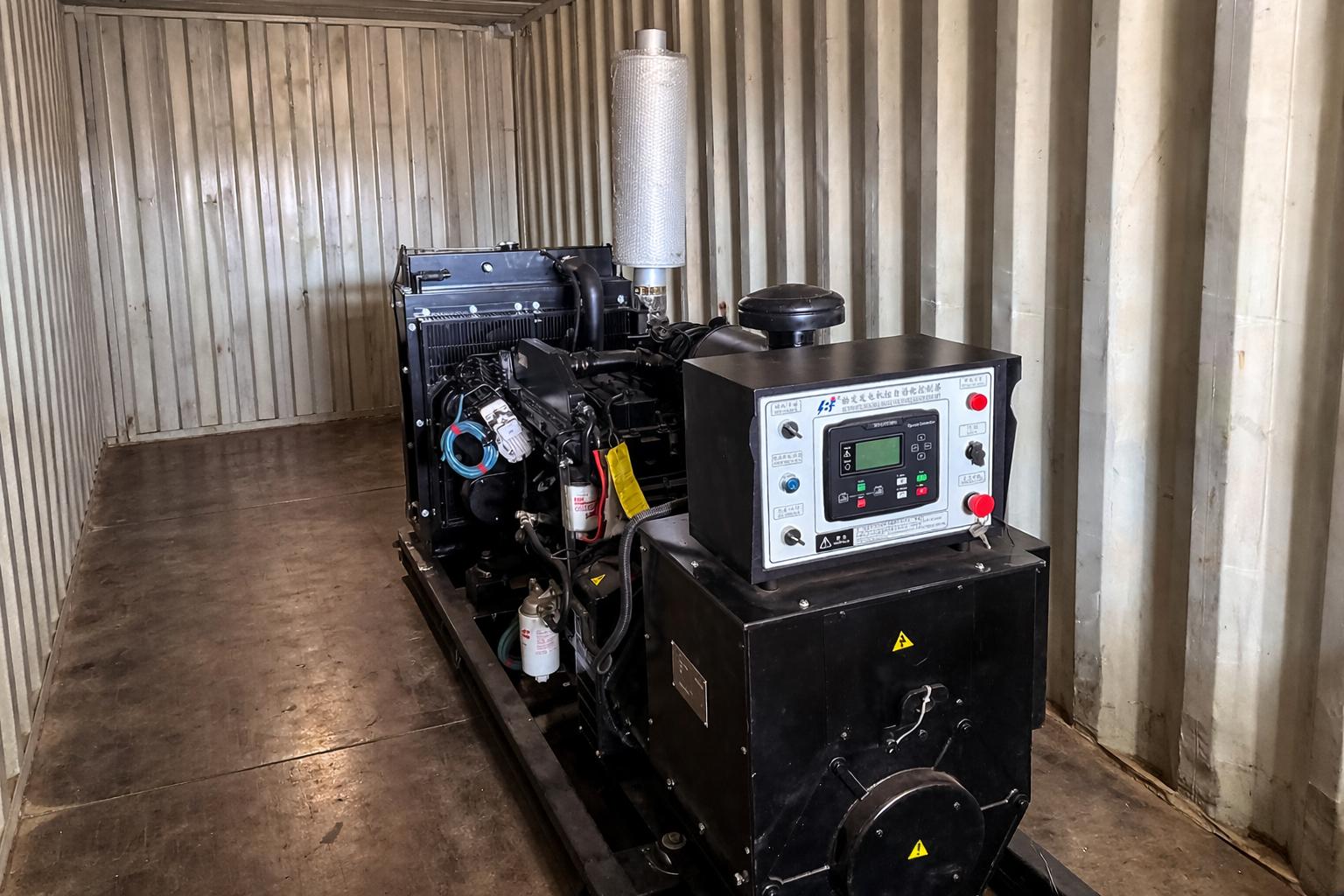
Photo 21 — Generator with control automation unit
Section 6
Equipment Field Testing
The equipment has undergone pilot testing in Romania on a range of polymetallic materials. These included sands; pyrite dump material generated at sulphuric acid plants where pyrite ore is roasted (so-called pyrite cinders — the iron-oxide roasting residue that retains residual precious and non-ferrous metals); run-of-mine ore processed in the Zlatna and Certej areas; and various other primary ore materials, including tailings and processing dumps.
Testing was completed successfully and confirmed the high efficiency of this equipment across a broad range of gold- and polymetallic-bearing feed materials.
The standard ore of these districts belongs to the Golden Quadrilateral (Metaliferi / Apuseni Mountains) — intermediate- and low-sulphidation epithermal gold-silver ores hosted in Neogene andesites and the enclosing sedimentary rocks.
Ore mineralisation comprises sulphides (pyrite, sphalerite, galena, chalcopyrite, arsenopyrite, fahlore of the tennantite–tetrahedrite series) and gold-silver tellurides; native gold occurs as electrum (approximately Au ~70%, Ag ~28%); gangue minerals are quartz, calcite and barite. Part of the gold is fine-grained and associated with sulphides.
Section 7 · Commercial Terms
Supervision, Commissioning & Calibration
The team that designed and assembled this plant provides installation supervision at the client's site, commissioning and start-up into production. Our specialists calibrate every operating parameter of the equipment for the client's specific material — carrying out the necessary tests and selecting the working regimes (slurry density and flow, rotor speed and G-force, fluidisation water pressure, concentrate rinse cycle and others) to achieve the best possible recovery.
Scope of Supply
Configured per project
Modules are selected for the feed material and site conditions. Surplus blocks are not included in the supply.
Transport
Standard road transport
Every block is within transport dimensions and travels separately. The gold room folds to 40-ft container dimensions.
Site Preparation
Water & power only
A thin concrete slab or compacted earth pad is sufficient. The diesel generator allows fully off-grid operation.
Installation
A few hours per block
Blocks are joined by flexible reinforced slurry and water hoses and weatherproof flexible power cables.
Commissioning
By the design team
Supervision, start-up and calibration of all parameters for the client's material, including the required test work.
Gold Room Module
Separate block
Supplied separately at a separate price. Full description on the Processing division page.
Get in Touch
Request a Quote
Phone
Website
Registered Office
Sos. Bucuresti-Ploiesti Nr.19-21
Office R.32, Floor 6, Sector 1
RO-013682 Bucharest, Romania
Trade Register: J40/21653/2023
VAT: RO49122949
Product Ref.
FV3000 · Modular Gravity Plant
20–30 t/h · Falcon SB400 ×2